
Root
Method
Growing from the inside out
A four-stage way to build the relationships that bring work through the door — starting with the quiet part nobody sees.
You did not choose architecture, landscape architecture, construction or engineering because you wanted to sell. You chose it because you wanted to create and build places.
Then, somewhere along the way, you were told you were also responsible for bringing in the work. Most of the advice that followed was built for salespeople: pipelines, pitch decks, follow-up cadences, scripts. It can feel like wearing someone else’s coat.
So business development gets avoided, not because you are lazy, but because it does not feel like you.
The ROOT Method starts somewhere else. It recognizes that you already know how to build relationships with clients, consultants, contractors, and peers. It simply gives that instinct a structure that can keep working, even when you are busy.
Why most business development advice doesn't work for designers
Four stages, in order
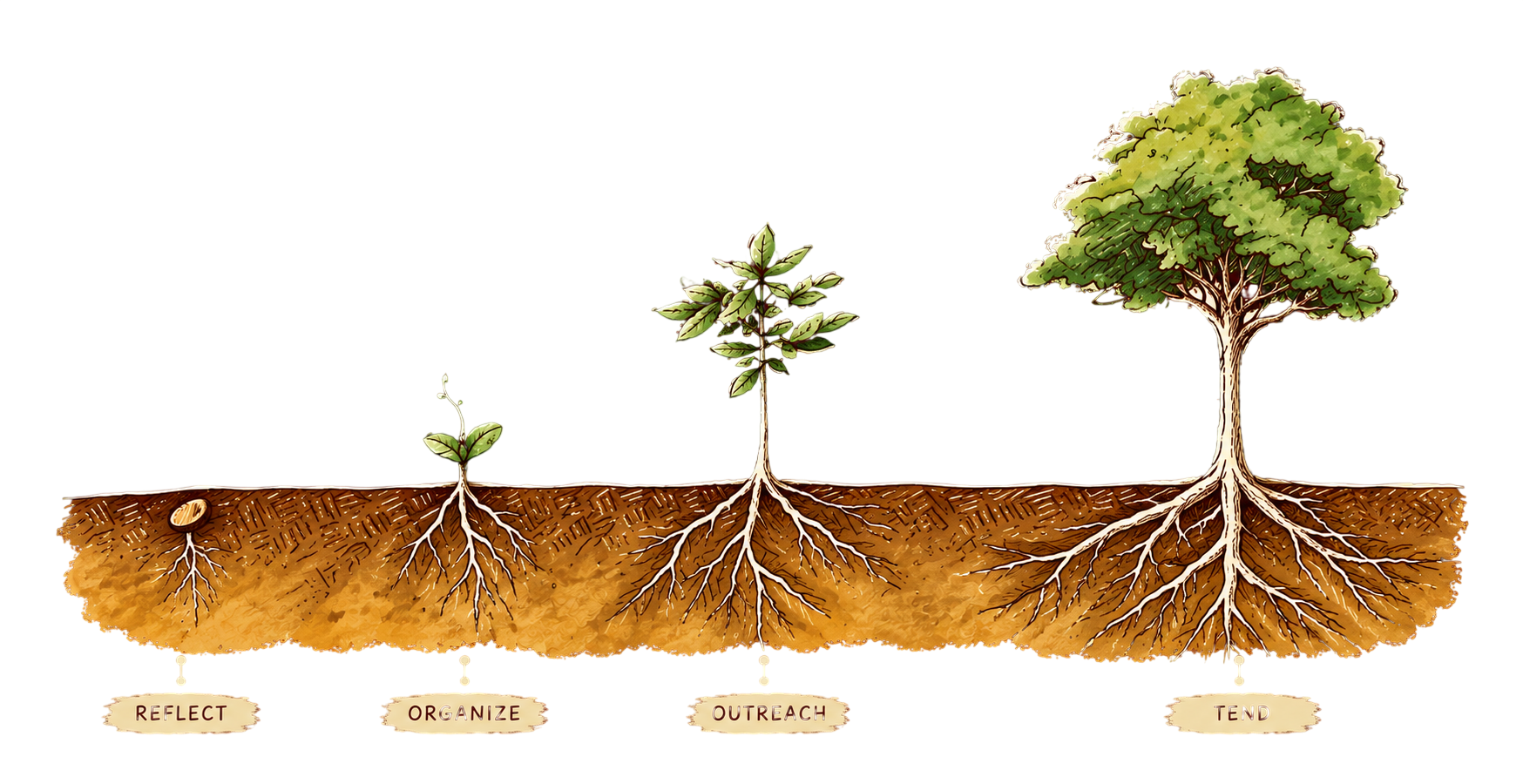
Two below ground, two above. The first two are the work nobody sees — and the reason the second two actually work.
Reconnect with the core motivation and inspiration of your work
R
STAGE ONE
Reflect
Most people start business development by making a list of who they should call. That's the wrong end. You end up chasing work you don't want, for people you don't like, because you never stopped to decide what you were actually after.
Reflect is the slow part. What work has made you feel most alive? Who were you with when it happened? What would you want more of if nobody was watching?
Questions we sit with
Which project would you happily do again tomorrow?
What do you want to be known for in five years?
What kind of client makes the work better?
What are you quietly hoping never lands on your desk again?
What you end up with
A clear, honest picture of the work you're actually trying to attract.

Dream about the future of your work, and make a simple plan to bring it to life.
o
STAGE TWO
Organize
This isn't admin, and it isn't a spreadsheet of contacts. It's the stage where you let yourself imagine what the work could look like — then turn that into something small enough to actually start.
Most people skip straight from a vague ambition to a long to-do list, and abandon it by March. A simple plan survives a busy month. That's the whole test.
What we do
Picture the work you want three years out, properly
Name the few things that would have to be true
Cut it down until it's genuinely simple
Decide what happens in the next month, not the next year
What you end up with
A picture of where you're heading, and a plan short enough that you'll actually follow it.

Connect with people who inspire you, for mutually beneficial relationships.
O
STAGE THREE
Outreach
This is the part everyone dreads, and it's only dreadful because of how it's usually taught. You've been told to have a value proposition ready and always be closing. No wonder you'd rather redraw a detail.
Here it's the opposite. You reach out to people whose work you genuinely admire — and you go in with something to offer, not to sell. It only works if both sides get something, which is also the only version that lasts.
What changes
You approach people who inspire you, not just people who could hire you
Curiosity instead of a pitch
You arrive with something to offer, not only something to ask
Every connection is intentional, not reactionary
What you end up with
Conversations. Not leads or prospects — conversations with people you're glad to be talking to.

Nurture these precious friendships, and always seek ways to give meaningfully.
T
STAGE FOUR
TEND
Here's what usually happens. Someone does a course, has a burst of energy, sends fifteen messages in a fortnight — then a deadline lands and it stops. Six months later they're back where they started, feeling slightly worse about it.
Tending is what turns a flurry into a practice. And note the word friendships — not contacts, not leads. The test of this stage isn't what you got from someone. It's what you gave, and whether it actually meant something.
What we build
A rhythm light enough to survive your busiest month
Reasons to be in touch that aren't “just checking in”
A habit of giving first — an introduction, a recommendation, a name
Patience, and a way to see progress before the work arrives
What you end up with
A network that's alive when you need it, instead of one you restart every time.

How this is different
Most business development training is built for salespeople and adapted for technical professionals. This was built the other way round.
What you've been taught
Start with a target list
Lead with a value proposition
Approach people who can hire you
Follow up until they respond
Measure activity
Networking as a numbers game
The ROOT Method
Start with why you do the work
Lead with curiosity
Approach people who inspire you
Stay in touch because you mean it
Measure relationships, not activity
Fewer people, known properly
Where you can learn it
Every way of working together runs on these four stages. The difference is pace, format, and how much we do together.
Virtual workshop
All four stages across five one-hour sessions, in a cohort of twelve. The easiest place to start.
1:1 coaching
The method applied to your work and your relationships, with someone holding you to it.
The Retreat
Two and a half hours outdoors, focused on Reflect — the stage that needs space more than any other.
Questions about the method
-
Yes, and this is the part people resist. Outreach without Reflect is how you end up busy with work you didn't want. The first two stages are quicker than they sound — they only feel slow because nothing visible happens yet.
-
Then we've found your starting point. That's precisely what Reflect is for, and it's more common than you'd expect
-
Less than you think. It's built around fewer, deeper relationships with people you already admire — not working a room. Most of my clients would describe themselves the same way.
-
That the outward work only holds up if the inward work came first. Reflect and Organize are about you — your motivation and your plan. Outreach and Tend are about other people. Do them in that order and it doesn't feel like pretending.
-
Yes. Organize is even more useful at firm level, because it gets a group dreaming about the same future rather than five different ones.
-
Conversations feel different within weeks. Work coming through usually takes six to twelve months, because that's how relationships move. Anyone promising faster is selling something else.
Want to try it?
Book a short intro call and I'll walk you through how the method would apply to your situation. No pitch.
Subscribe to our newsletter
Sign up with your email address to stay in the know and to read my thoughts and insights.